Connect With Us:   

Bachelor of Arts Education (B.A.B.Ed.)

Bachelor of Arts Education (B.A.B.Ed.)

1.0 Programme and Duration

Integrated Programme of Teacher Education titled ‘Bachelor of Arts Education’ (B.A.B.Ed.) is a degree course. The course will be of four year duration organized on the semester pattern with 2 semesters in a year. Each semester will consist of 16 weeks of instruction excluding examination.


Equivalence: The course contents related to English Literature/Language Studies/Social Science/History, Political Science, Economics, Geography in B.A.B.Ed. course are equivalent to that of respective subjects offered in B.A. course of University of Mysore. The course contents related to education components in B.A.B.Ed. are equivalent to B.Ed. course of University of Mysore. The degree B.A.B.Ed. is equivalent to B.A. and B.Ed. degrees of the University of Mysore. Students who pass this course are considered eligible to pursue Masters Degree in the respective subjects in the Departments of the University of Mysore.

2.0 Eligibility for admission to B.A.B.Ed

2.1 Candidates seeking admission to the B.A.B.Ed. course should have passed CBSE Senior Secondary examination/ Pre-University examination of Karnataka or an equivalent examination of Kerala, Andhra Pradesh, Tamil Nadu,Pondicherryor the UT of Lakshadweep with 45% marks in the aggregate. Relaxation up to 5% of marks shall be given to the SC/ST candidates.

2.2 Candidates should have passed the qualifying examination with the following combinations of subjects – English, Regional Language and any two of the following subjects: History, Geography, Economics, Political Science and Sociology.

2.3 Admission shall be regulated through selection on the basis of marks in the qualifying examination or performance in a specially designed selection test or both as per the admission policies of NCERT from time to time. The selection test shall consist of Multiple Choice Questions with equal weightage to the three content areas of the combination of subjects at CBSE/PUC/+2 level. Admission will be in accordance with administrative policies related to proportionate representation (based on the latest available census report) to different States in the region. It will also be governed by the reservation policies of Govt. of India as prevalent at the time of admission.

2.4 Institutions other than RIE,Mysoreoffering the course follow admission rules of undergraduate courses of the University of Mysore.

3.0 Scheme of Instruction
Details of courses and scheme of study, duration etc, are provided in Table 1. Courses of Study are organized into three categories:

a) Hard Core
b) Soft Core
c) Electives

3.1 Hard Core:
Comprises of courses that are mandatory for all students: a) Regional Language: Any one of the following languages – Kannada/ Hindi / Tamil / Telugu / Malayalam. b) English c) Environmental Studies, Information and Communication Technology in Education (ICT), Indian Constitution and Human Rights, Holistic Education/ Theatre, Arts and Heritage Crafts Tradition.


3.2 Soft Core:
Seven courses in education, 2 courses one in Pedagogy of English Languge and another in Pedagogy of Social Science.

Following two streams are offered

a) English Literature, Language Studies, Social Science

b) English Literature, Social Science, History/ Geography / Economics /Political Science. The progrmme also includes a comprehensive school attachment programme; the internship in teaching.

3.3 Electives:
Comprises of one education course(Guidance and Counselling/Inclusive Education)


4.0 Attendance

Every student has to attend a minimum of 75% of the classes conducted in each course. If a candidate has failed to put in a minimum of 75% attendance in a course, she/he is deemed to have dropped the course and is not allowed to write the semester end examination of that course. She/He has to attend the classes of that course in the subsequent years whenever it is offered after registering for the same course.

5.0 Medium of Instruction

The medium of instruction and examination shall be English.


The syllabus can be downloaded from here - click here
 

Click here to download the Prospectus

Other Units of NCERT

ncerit

The National Council of Educational Research and Training (NCERT) is an autonomous organisation set up in 1961 by the Government of India to assist and advise the Central and State Governments on policies and programmes for qualitative improvement in school education. The major objectives of NCERT and its constituent units are to: undertake, promote and coordinate research in areas related to school education; prepare and publish model textbooks, supplementary material, newsletters, journals and develops educational kits, multimedia digital materials, etc. organise pre-service and in-service training of teachers; develop and disseminate innovative educational techniques and practices;collaborate and network with state educational departments, universities, NGOs and other educational institutions. Read more

shillong

The North East Regional Institute of Education (NERIE) is a constituent unit of National Council of Educational Research and Training (NCERT), New Delhi. NERIE was set up at Shillong in 1995 to cater to the educational needs of the North Eastern states, viz., Assam, Arunachal Pradesh, Manipur, Meghalaya, Mizoram, Nagaland, Sikkim and Tripura. The other constituent units of NCERT are National Institute of Education (New Delhi); Central Institute of Educational Technology (CIET), New Delhi; Pandit Sunderlal Sharma Central Institute of Vocational Education (PSSCIVE), Bhopal  Read more

RIE - BHU

The Regional Institute of Education, Bhubaneswar is a constituent unit of National Council of Educational Research and Training (NCERT), New Delhi. The NCERT was set up by Government of India in 1961 as an autonomous organization registered under Societies Registration Act (Act XXI of 1860) to advise and assist the Ministry of Human Resource Development (MHRD), Govt. of India and Departments of Educatio in States and Union Territories in formulation and implementation of their policies and programmes in the field of Education.  Read more

rie_bho

Regional Institute of Education (RIE), Bhopal is a constituent unit of NCERT, New Delhi. The Institute looks after teacher education and other educational requirements of the States of Chhattisgarh, Goa, Gujarat, Madhya Pradesh, Maharashtra and UTs of Dadra and Nagar Haveli and Daman and Diu. The Institute is located at Shyamla Hills and is 7 Kms away from both Bhopal and Habibganj railway stations and about 20 Kms from Raja Bhoj Airport, Bhopal.Read More

rie_ajmer

Regional Institute of Education, Ajmer was set up in the year 1963. It looks after the educational interests of Northern Region comprising the states of Haryana, Himachal Pradesh, Jammu & Kashmir, Punjab, Rajasthan, Uttaranchal, Uttar Pradesh, the National Capital Territory of Delhi and the Union Territory of Chandigarh.Ajmer is well-known all over India as a historical and religious place of pilgrimage as well as an educational centre. It owes this reputation partly to the Regional Institute of Education (RIE).Read more

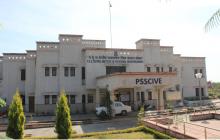
PSSCIVE

The Pandit Sundarlal Sharma Central Institute of Vocational Education (PSSCIVE) is an apex research and development organization in the field of vocational education. It is a constitute unit of National Council of Education Research and Training(NCERT), established by the Ministry of Human Resource Development (MHRD), Government of India in 1993 at Bhopal. It is a UNEVOC (International Project on Technical and Vocational Education) Center in India.Read More

ciet

Central Institute Of Educational Technology(CIET), a consitituent unit of NCERT, came into existence in the year 1984 with the merger of Center for Educational Technology and Department of Teaching Aids.CIET is a premiere national institute of educational technology.Its major aim is to promote utilization of educational technologies viz. radio,TV, films, Satellite communications and cyber media either separately or in combinations. The institute undertakes activities to widen educational opportunities, promote equity and improve quality of educational processes at school level.Read More

The Department of Higher Education, Ministry of Human Resource Development, Govt. of India, New Delhi has recently set up an Inter University Centre for Teacher Education (IUCTE) at the Regional Institute of Education, Mysore, which is one of the constituent units of the NCERT, New Delhi which in turn is an autonomous body under the Ministry of HRD, Govt. of India, New Delhi. The IUCTE aims to strengthen the knowledge base of Teacher Education by facilitating professional development, networking, new knowledge creation and empowerment of teachers of Academic Institutions and Central & State Universities in Southern Region.

Visit IUCTE Website