Connect With Us:   

Programme Advisory Committee (PAC)

The programme advisory Committee (PAC) shall make recommendations to all the Executive Committee regarding the lines on which research, training, extension and other programmes of the Council should be conducted and the channels into which they should be guided. In order best to serve the object of promoting the improvement of school education, in the country, keeping in view of the role of the council as outlined in Article 3 of the Memorandum of Association. It will be the responsibility of the programme advisory committee to consider all plans, programmes, research proposals, etc. and to examine the academic aspects of the work of the Council and to ensure’s coordinated approach to the development of their programme.

The programme Advisory Committees shall consist of the following members:

1. The Director of the Council------ Chairman
2. Joint Director of the Council----- Vice-Chairman
3. Five University Professors or Heads of Departments representing Education and other related Disciplines, nominated by the President of the Council
4. Five Directors of State institute of Education to be nominated by the President of the council in rotation from all states and union Territories
5. Two representatives of each department of the NIE of whom one shall be the Head
6. And the principal and one Professor, Reader from each of the constituent institutions of the National Council of Educational Research and Training.

The Programme Advisory Committee may appoint such sub-committees as it may consider necessary to deal with special problems or programmes entrusted to them or with special aspects of its work.

The term of office of the nominated members shall be three years from the date of their nomination. However, the nominating authority shall have the powers to terminate or extend the period of membership by any time.

PLANNING AND PROCESSING OF PROGRAMMES
The programmes of NCERT are formulated keeping in view the broader perspectives of the National Policy on Education (NPE) and the educational needs of the states requiring NCERT’s inputs, among other things. The educational needs of the states are identified mainly through the mechanism of the State Co-ordination Committees (SCCs) which provide a forum for interaction among the NCERT faculty with the senior functionaries of the State Education Departments. The Education Secretary of the State is the Chairperson of the SCC and the Principal of the concerned Regional Institute of Education (RIE) is the Member-Convener. The identified educational needs of the states are first considered by the Institutes Advisory Boards (IABs) of RIEs and then the Managing Committees (MCs) of RIEs.The academic programmes of the Departments of the NIE are processed through the Advisory Boards of the individual Departments (DABs) and thereafter by the Academic Committee (AC) of the NIE.Programmes of the CIET are processed through the Institute’s Advisory Board (IAB). Similarly, the programmes of the PSSCIVE are processed through its Institute’s Advisory Board (IAB).

Conducting and sponsoring educational research is one of the major activities of NCERT. Research programmes proposed by the constituents of the NCERT and other institutions/organisations are considered by the Educational Research and Innovations Committee (ERIC). ERIC promotes and sponsors research in various areas of school education and teacher education.

The programmes processed by various committees are finally considered by the Programme Advisory Committee (PAC). The PAC reports to the Executive Committee of the NCERT the overall directions in which research, training, extension and other programmes would be channelised to best serve the interest of school education in the country.
pc1


PC3
pc4
pc1

Other Units of NCERT

ncerit

The National Council of Educational Research and Training (NCERT) is an autonomous organisation set up in 1961 by the Government of India to assist and advise the Central and State Governments on policies and programmes for qualitative improvement in school education. The major objectives of NCERT and its constituent units are to: undertake, promote and coordinate research in areas related to school education; prepare and publish model textbooks, supplementary material, newsletters, journals and develops educational kits, multimedia digital materials, etc. organise pre-service and in-service training of teachers; develop and disseminate innovative educational techniques and practices;collaborate and network with state educational departments, universities, NGOs and other educational institutions. Read more

shillong

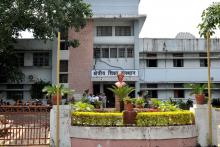
The North East Regional Institute of Education (NERIE) is a constituent unit of National Council of Educational Research and Training (NCERT), New Delhi. NERIE was set up at Shillong in 1995 to cater to the educational needs of the North Eastern states, viz., Assam, Arunachal Pradesh, Manipur, Meghalaya, Mizoram, Nagaland, Sikkim and Tripura. The other constituent units of NCERT are National Institute of Education (New Delhi); Central Institute of Educational Technology (CIET), New Delhi; Pandit Sunderlal Sharma Central Institute of Vocational Education (PSSCIVE), Bhopal  Read more

RIE - BHU

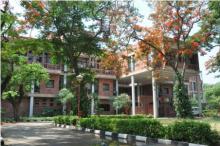
The Regional Institute of Education, Bhubaneswar is a constituent unit of National Council of Educational Research and Training (NCERT), New Delhi. The NCERT was set up by Government of India in 1961 as an autonomous organization registered under Societies Registration Act (Act XXI of 1860) to advise and assist the Ministry of Human Resource Development (MHRD), Govt. of India and Departments of Educatio in States and Union Territories in formulation and implementation of their policies and programmes in the field of Education.  Read more

rie_bho

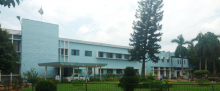
Regional Institute of Education (RIE), Bhopal is a constituent unit of NCERT, New Delhi. The Institute looks after teacher education and other educational requirements of the States of Chhattisgarh, Goa, Gujarat, Madhya Pradesh, Maharashtra and UTs of Dadra and Nagar Haveli and Daman and Diu. The Institute is located at Shyamla Hills and is 7 Kms away from both Bhopal and Habibganj railway stations and about 20 Kms from Raja Bhoj Airport, Bhopal.Read More

rie_ajmer

Regional Institute of Education, Ajmer was set up in the year 1963. It looks after the educational interests of Northern Region comprising the states of Haryana, Himachal Pradesh, Jammu & Kashmir, Punjab, Rajasthan, Uttaranchal, Uttar Pradesh, the National Capital Territory of Delhi and the Union Territory of Chandigarh.Ajmer is well-known all over India as a historical and religious place of pilgrimage as well as an educational centre. It owes this reputation partly to the Regional Institute of Education (RIE).Read more

PSSCIVE

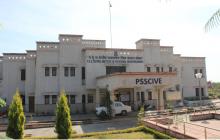
The Pandit Sundarlal Sharma Central Institute of Vocational Education (PSSCIVE) is an apex research and development organization in the field of vocational education. It is a constitute unit of National Council of Education Research and Training(NCERT), established by the Ministry of Human Resource Development (MHRD), Government of India in 1993 at Bhopal. It is a UNEVOC (International Project on Technical and Vocational Education) Center in India.Read More

ciet

Central Institute Of Educational Technology(CIET), a consitituent unit of NCERT, came into existence in the year 1984 with the merger of Center for Educational Technology and Department of Teaching Aids.CIET is a premiere national institute of educational technology.Its major aim is to promote utilization of educational technologies viz. radio,TV, films, Satellite communications and cyber media either separately or in combinations. The institute undertakes activities to widen educational opportunities, promote equity and improve quality of educational processes at school level.Read More

The Department of Higher Education, Ministry of Human Resource Development, Govt. of India, New Delhi has recently set up an Inter University Centre for Teacher Education (IUCTE) at the Regional Institute of Education, Mysore, which is one of the constituent units of the NCERT, New Delhi which in turn is an autonomous body under the Ministry of HRD, Govt. of India, New Delhi. The IUCTE aims to strengthen the knowledge base of Teacher Education by facilitating professional development, networking, new knowledge creation and empowerment of teachers of Academic Institutions and Central & State Universities in Southern Region.

Visit IUCTE Website